
how it works
How Does Period Underwear Work? A Clear Guide for Hong Kong
Short answer
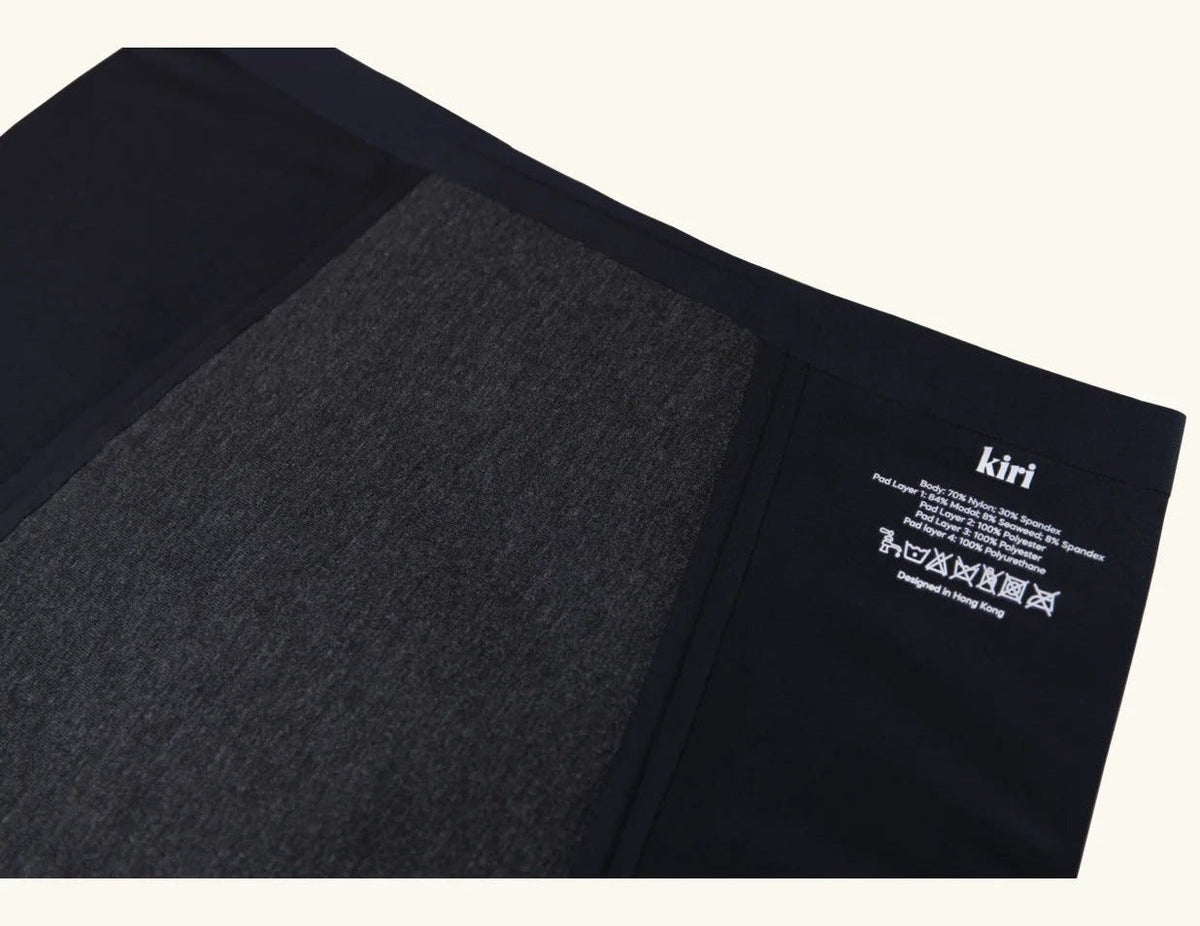
Period underwear has a pad built into the gusset. Kiri's has four bonded layers: a moisture-wicking top layer, an antibacterial layer, an absorbent core and a leakproof shield. You wear it like normal underwear; daywear holds up to 50 ml and nightwear up to 75 ml.
Period underwear works by building the job of a pad directly into the underwear itself. Instead of adding a product to your day, the gusset is made of several bonded layers that pull moisture away from your skin, absorb the flow, and block it from reaching your clothes. You put it on in the morning like any other underwear, and it does the rest — no applicator, no adhesive, no timing it around a bathroom break.
That's the short answer. Here's what's actually happening underneath, and how to tell which pair is right for you.
The four layers, and what each one does
From the outside, a pair of Kiri period underwear looks like ordinary underwear. The difference is in the gusset, where four layers are bonded together:
- A moisture-wicking top layer — the part against your skin. It draws liquid downward almost instantly, so the surface stays feeling dry rather than wet.
- An antibacterial layer — neutralises the bacteria that cause odour, which is what keeps a pair feeling fresh across a full day.
- An absorbent core — the layer that holds the liquid. This is where capacity comes from: our daywear style holds up to 50 ml, roughly 5.5 regular tampons' worth; the nightwear style holds up to 75 ml, about 8.5 tampons.
- A leakproof shield — a final water-resistant barrier so nothing reaches your clothes, even sitting or lying down.
None of these layers use dioxin, chlorine or rayon, so the fabric sitting against your skin has no reason to irritate it.
What it actually feels like
The most common thing customers tell us is that it feels like nothing. There's no bulk between your legs the way a pad has, and nothing to insert. On a moderate day, a single pair can usually last from morning to evening. On a heavier day, you change once — the same way you'd change underwear anyway — and it's designed to be worn on its own. If you want extra peace of mind, you can add a tampon or cup, but it isn't necessary.
Day versus night: which to choose
The choice comes down to your flow and when you're wearing it. Daywear panties sit at a lower waist and handle light-to-moderate days on their own. Nightwear panties are cut higher with padding that runs all the way to the back of the waistband, so they hold up while you're lying down — that back coverage is the whole reason they work overnight. If your flow changes a lot across your cycle, a day-and-night bundle covers both without thinking about it. If you're dealing with heavy days specifically, our full guide to the best period underwear for heavy flow and overnight covers exactly what to look for. Not sure how to weigh capacity against fit? Our guide to choosing period underwear walks through both.
One fitting note: the nightwear cut runs a little tighter than the daywear, so your size can differ between the two styles. If you're between sizes, go down a size. Our size guide has the waist and hip measurements for each style.
Built for Hong Kong's humidity
We're a Hong Kong team, and heat and humidity were part of the brief from the start. It isn't enough for the top layer to wick moisture from the inside — it also has to stay breathable against outside humidity so a pair never feels clammy on a 33-degree day. That's a different design problem from period underwear made for temperate climates, and it's the reason ours is drawn the way it is. We go deeper on this in does period underwear feel hot in Hong Kong's humidity.
Caring for it (so it lasts years, not months)
Rinse under cold running water until it runs clear, machine wash cold inside a laundry bag, and line dry. No bleach, no fabric softener, no tumble dryer — heat and softener are the two things that shorten an absorbent layer's life. Cared for this way, one pair stays leakproof and soft wash after wash for years, which is what makes the switch tend to be permanent — see exactly how long a well-cared-for pair lasts and what determines it.
How much can period underwear hold?
| Style | Holds up to | About the same as | Best for |
|---|---|---|---|
| Daywear | 50 ml | 5.5 regular tampons | Light to moderate days |
| Nightwear | 75 ml | 8.5 regular tampons | Heavy days and overnight |
These are capacity figures, not hours. How long a pair lasts depends on your flow, so change when it starts to feel full rather than by the clock. On a lighter day that can be a full day; on a heavier day you change once, about as often as you'd change a pad.
Period underwear vs pads: what's actually different
| Pad | Period underwear | |
|---|---|---|
| Where the absorbency sits | A separate layer stuck to your underwear | Bonded into the gusset |
| How it feels | Bulk between the legs | Like ordinary underwear |
| Staying in place | Can shift or bunch | Moves with you, because it is the underwear |
| After use | Thrown away | Rinsed, washed and worn again |
| Cost over time | An ongoing purchase | Higher up front, reused for years |
For tampons and cups as well, see our honest comparison of every option.
Where to start
One pair is usually enough to understand what pads and tampons were missing. If you're new to it, start with a daywear pair toward the end of your next period, when your flow is lighter, and see how it feels. When you're ready to browse, the whole period underwear range sits in one place, and the full collection is here.
Common questions
Is period underwear hygienic?
Yes, as long as you change it when it feels full and wash it before wearing it again. The antibacterial layer works on odour-causing bacteria while you wear it, and a cold rinse and wash clears the rest.
Does period underwear feel wet?
No. The moisture-wicking top layer pulls fluid down into the absorbent core, so the surface against your skin stays feeling dry.
Can you swim in period underwear?
No. It's built to absorb, so in water it soaks up pool or sea water instead. For swimming, use a tampon or cup; see period swimwear in Hong Kong.
Can I wear it on my heaviest day?
Yes. Nightwear holds up to 75 ml and is designed to be worn on its own. If you regularly soak through any period product every hour or two, that's heavier than products are built for and worth checking with a doctor.
Can I see it before I buy?
Yes. Our display is inside Blomstre, Shop 401, 4/F C & D, Hopewell Mall, Wan Chai, open Monday to Sunday, 12pm to 9pm. Directions and details.
Keep reading
- Is Period Underwear Worth It? 7 Questions Before You Switch
- How to Choose Period Underwear: Absorbency, Gusset and Fit
- Does Period Underwear Feel Hot in Hong Kong's Humidity?
- How Long Does Period Underwear Last? (And How to Make It Last)
- The Best Period Underwear for Heavy Flow and Overnight
- Period Underwear vs. Pads, Tampons and Cups: An Honest Comparison
Frequently asked questions
Does period underwear feel wet?
No. The moisture-wicking top layer pulls fluid down into the absorbent core, so the surface against your skin stays feeling dry.
Does period underwear really not leak?
Within its capacity and in the right size, no. The leakproof shield stops fluid reaching your clothes. Most leaks come from a loose size or from flow exceeding the pair's capacity.
What is Kiri period underwear made without?
None of the layers use dioxin, chlorine or rayon. Every layer of the daywear and nightwear was also independently tested for 19 PFAS, with none detected.
Is period underwear hygienic?
Yes, as long as you change it when it feels full and wash it before wearing it again. The antibacterial layer works on odour-causing bacteria while you wear it, and a cold rinse and wash clears the rest.
Can you swim in period underwear?
No. It is built to absorb, so in water it soaks up pool or sea water instead. For swimming, use a tampon or cup.
How it works
Recommended for you


