
sizing
How to Choose Your Size and Absorbency: What the ML Numbers Actually Mean
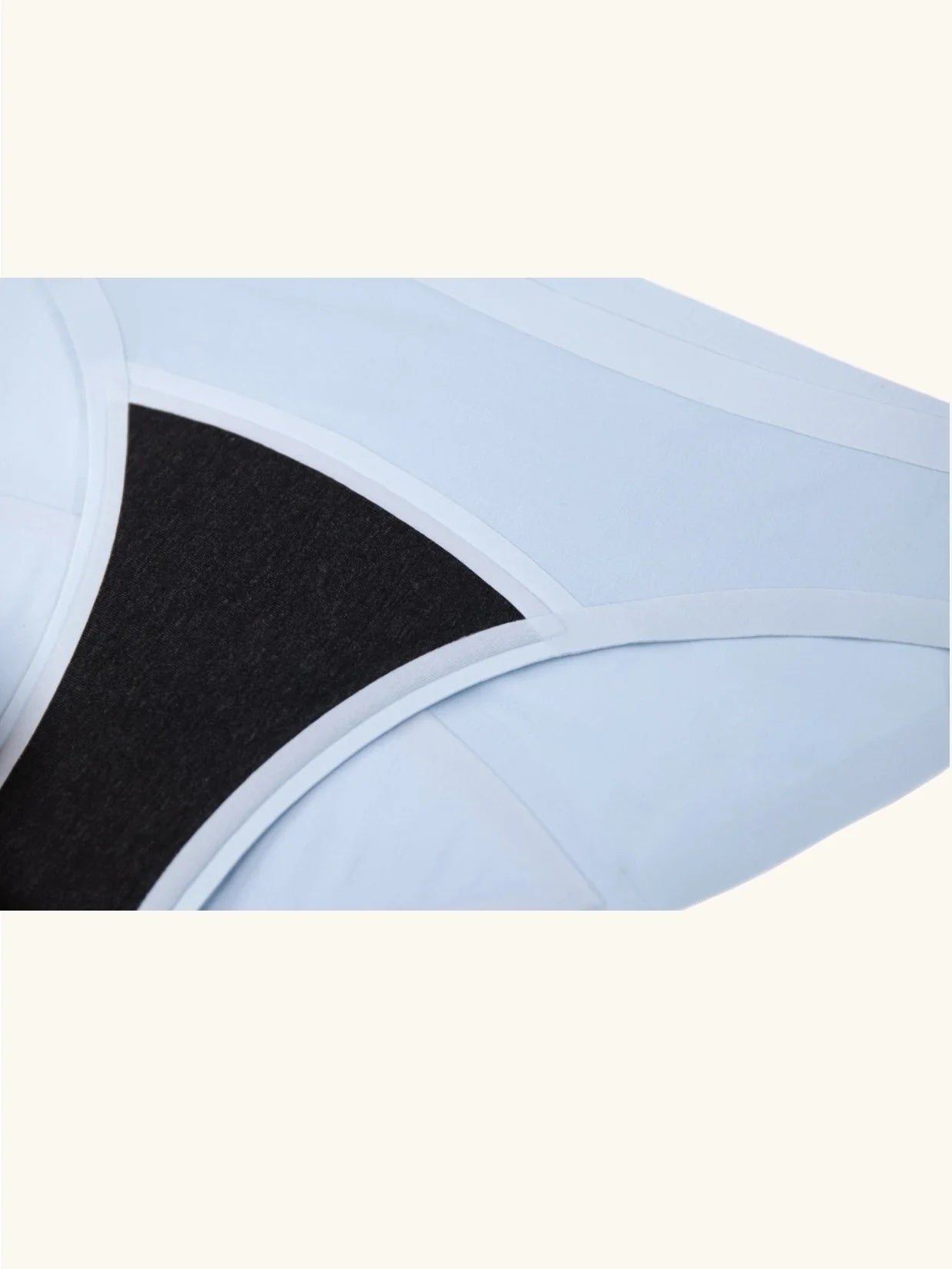
Absorbency numbers on a product page — "50 ml," "75 ml" — aren't intuitive on their own. Nobody has a felt sense of what a millilitre of fluid means for a day of wear, which is exactly why sizing guides that stop at the number leave people guessing. Here's what it actually translates to, and how to use it to choose between styles.
Translating ml into something familiar
Kiri's daywear panties hold up to 50 ml, which is roughly equivalent to 5.5 regular tampons or two to two-and-a-half pads. The nightwear style holds up to 75 ml — about 8.5 tampons — in a single pair. For context, average total menstrual blood loss across an entire period is commonly cited around 30–40 ml, with a heavier day accounting for a larger share of that than a lighter one; a single Kiri pair is built to comfortably outpace a full heavy day, not just an average one.
Daywear vs. nightwear: what actually differs
The two styles aren't just different absorbency numbers in the same cut. Daywear is a low-waist, seamless design built to disappear under regular clothing, even leggings, and move with you through a normal day. Nightwear is cut with a higher waist specifically for coverage while lying down — the area of concern shifts when you're horizontal for eight hours instead of upright, and the higher waist and larger capacity are both direct responses to that.
A simple way to decide: if you're planning around sitting, walking and a normal day's movement, daywear is built for that. If you're planning around eight hours lying still, or a heavier day where you'd otherwise be changing a daytime product more than once, nightwear is the better starting point — our full guide to the best period underwear for heavy flow and overnight covers exactly how to choose.
How long one pair actually lasts you
Most people can wear a single pair up to 12 hours, depending on flow — you'll know it's time to change when the gusset starts to feel saturated rather than by watching a clock. On lighter days, one pair can comfortably last the entire day. On heavier days, most people change once, roughly the same frequency as they'd change a pad or tampon anyway, just without the mid-day trip to restock.
What if you're between two sizes?
If your measurements fall between two listed sizes, we recommend sizing down rather than up. Period underwear needs to sit snugly against the body to do its job — a size too large creates gaps at the leg and waist where the leak-proof shield can't do the work it's designed for, while a snugger fit keeps the absorbent layer properly positioned throughout the day.
Building the right mix
Most people end up with a mix rather than one style worn every day: a few daywear pairs for the bulk of a cycle, one or two nightwear pairs for overnight and the heaviest day, and our antibacterial Daily line for the in-between days that aren't technically your period but still benefit from moisture-wicking, odour-neutralising fabric. Staying active? Our guide to wearing period underwear for a workout covers sizing for active days. Our full size guide has the exact measurements for every style, and Find My Fit can help if you're unsure where to start.


