
care
How to Wash and Care for Period Underwear
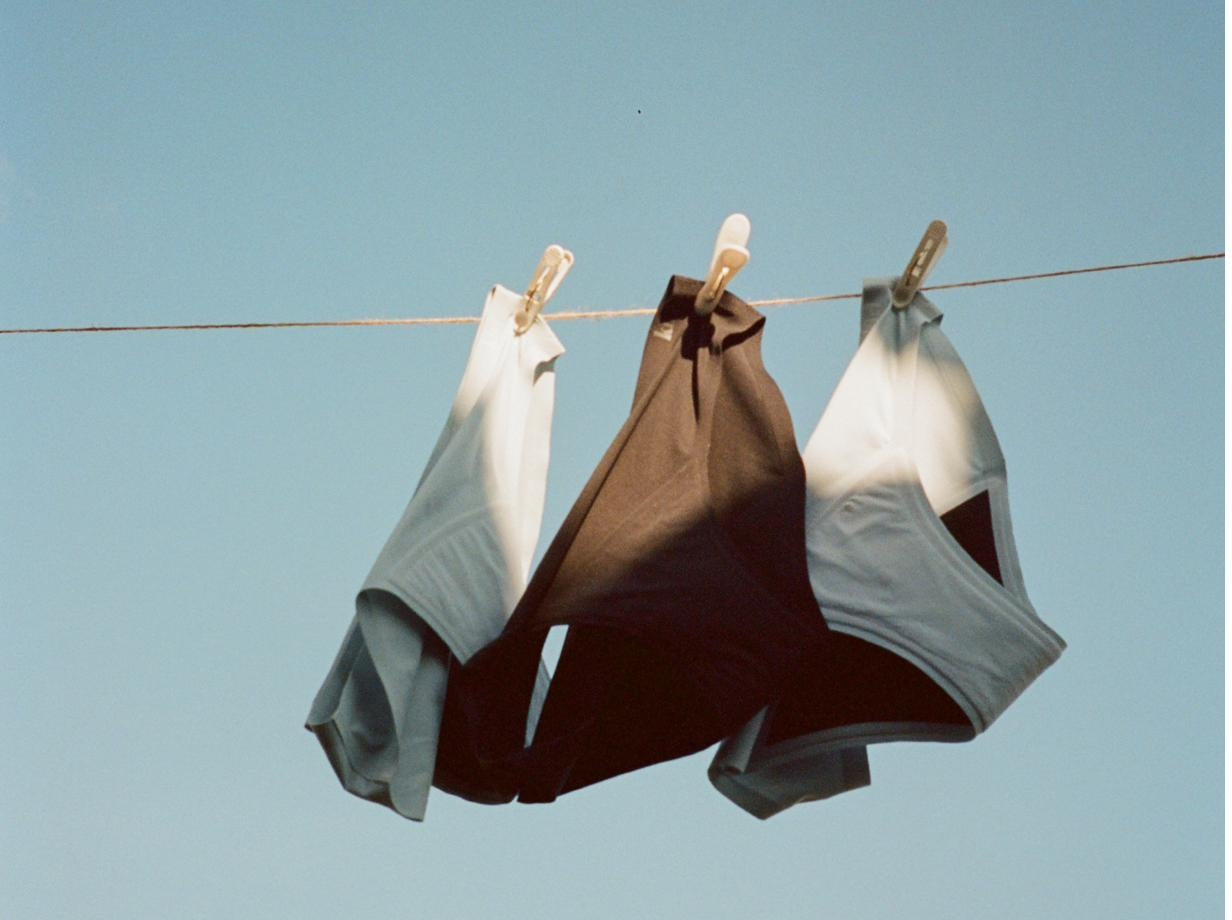
Period underwear is a bigger upfront decision than a box of pads — you're buying something meant to last years, not a single cycle — which makes the care routine part of the product, not an afterthought. Done right, it's genuinely simple: three steps, none of them complicated. Done carelessly, it's the single fastest way to shorten the life of a pair that should otherwise outlast dozens of cycles.
The three-step routine
1. Cold rinse, first
Before anything else touches your Kiri pair, rinse it in cold water until the water runs clear. This isn't optional housekeeping — it's the step that keeps blood from setting into the absorbent core, the same way you'd rinse any stain before it dries. Warm or hot water at this stage does the opposite of what you want: heat can set protein-based stains rather than lift them.
2. Machine wash, inside a laundry bag
Once rinsed, it goes into the regular wash with the rest of your laundry — cold water, delicate cycle. A mesh laundry bag isn't strictly required, but it protects the gusset's layered construction from friction against zippers, hooks and heavier fabric, and it keeps the pair contained in the machine rather than tangled in the drum. Skip fabric softener and bleach: softener coats the moisture-wicking layer and blunts the exact property that makes the fabric work, and bleach breaks down the absorbent core over time.
3. Line dry, always
Air dry, out of direct sun where possible. This is the step people are most tempted to skip, and the one with the most consequences — tumble drying's heat and tumbling motion is hard on the leak-proof outer layer specifically, the part responsible for keeping everything contained. The fabric is quick-drying by design, so line-dried overnight is normally ready by morning, which is what makes a rotation of three to five pairs realistic without ever running out.
What actually shortens a pair's life
In order of how much damage they do: tumble drying, bleach, and fabric softener. All three are common laundry-day defaults for other clothing, which is exactly why they're the most common mistakes with period underwear — nobody's being careless, they're just running the routine they run for everything else. The fix isn't more effort, it's a different three steps for one category of laundry.
Heavier days and stubborn stains
If a pair has seen a heavy day, a short soak of 20–30 minutes in cool water with a drop of mild detergent loosens anything dried in before the wash. Don't leave them soaking overnight — long soaks can encourage mildew and wear the fabric down faster than they help. A rinse-until-clear right after wearing is almost always enough on its own — and if you're wondering whether odour is normal at all, here's what's actually happening and how to prevent it.
Drying in Hong Kong humidity
Air drying is non-negotiable, and in Hong Kong's humidity that can mean a slower dry. Hang pairs with space around them rather than bunched together, somewhere with a little airflow — near a window or a fan is ideal. A drying rack indoors on a wet day works fine; the point is airflow, not heat. Rotating three to five pairs means you always have a dry, clean one ready even when nothing dries overnight.
How long a well-cared-for pair actually lasts
Cared for this way, a pair stays soft, leak-proof and reliable for years — see exactly how long a well-cared-for pair lasts, and what determines it — which is also the entire economic case for switching in the first place. See the full sustainability math for the real numbers. A single pair, worn and washed correctly across several cycles a year, ends up replacing hundreds of individual pads or tampons over its lifetime. The care routine isn't a chore layered on top of that value; it's the thing that makes the value real.
Building a rotation
Most people managing a full cycle comfortably keep three to five pairs on rotation — daywear for lighter days, nightwear for heavier ones and overnight, with one pair always washed and ready while another is in use. If you're starting from zero, our bundle sets are usually the cheapest way to build that rotation in one order, and our size guide covers how daywear and nightwear differ if you're deciding what mix to start with.


